
Sanara Project


Project Summary
Year: 2025
Duration: 1 year
Counties: Nairobi, Kiambu, and Kisumu
Impact Numbers: upskilled 159 direct project beneficiaries

THE GOAL
To catalyze social inclusion, economic self-reliance, and deep-seated stigma reduction for blind, visually impaired, and albino creatives across Kenya.
ABOUT THE PROJECT
The Sanara Creative Arts Initiative, pioneered by the Kenya Society for the Blind (KSB), serves as an inclusive flagship framework designed to catalyze social inclusion, economic self-reliance, and deep-seated stigma reduction for blind, visually impaired, and albino creatives across Kenya. This strategic initiative is proudly funded by the Heva Fund through the Mastercard Foundation, driving systemic change in the creative economy. Operating through robust regional linkages across Nairobi, Kiambu, and Kisumu counties, the initiative establishes structured pipelines for adaptive artistic coaching, mainstream media representation, and sustainable marketplace monetization.
Institutional Milestone Timeline & Footprints
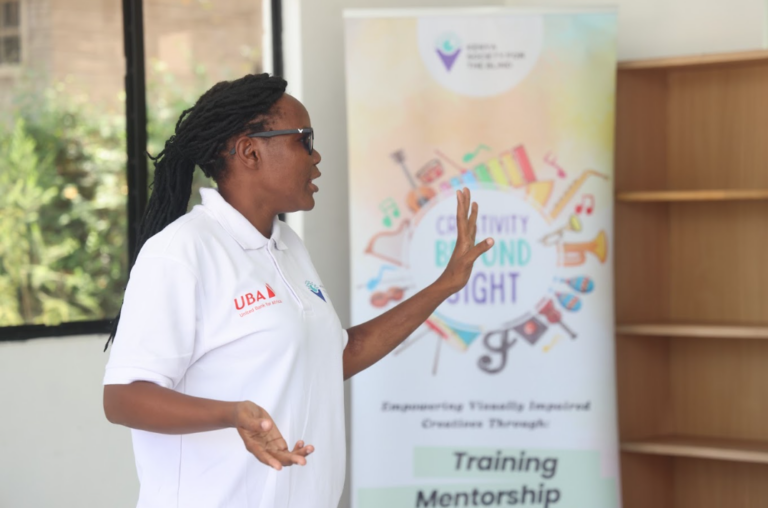
• Official Launch & Capacity Building (30th May 2025 | KSB Nairobi): Officiated by Mr. Benson Kiptum (Head of Programmes, KSB), the program trained an initial cohort of 37 Trainers of Trainers (ToTs) (25 male, 12 female). The group integrated 26 visually impaired individuals, 1 person with albinism, and 10 sighted facilitators to champion adaptive non-visual methodologies—such as tactile arts, auditory storytelling, and peer mentoring.
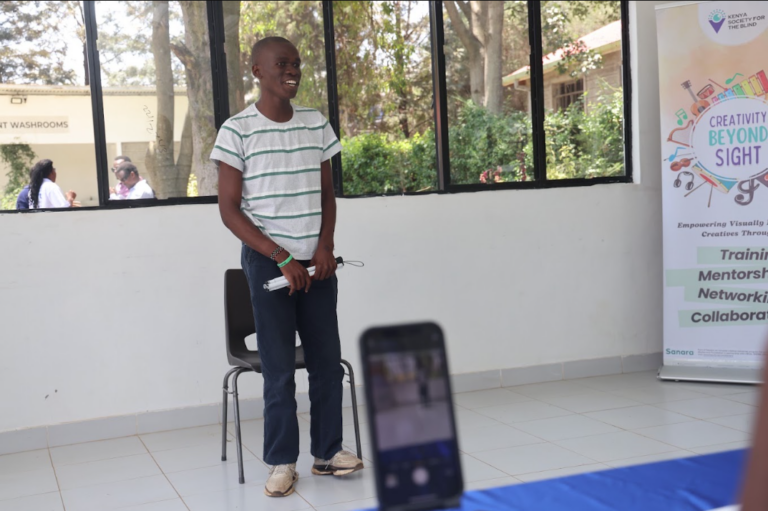
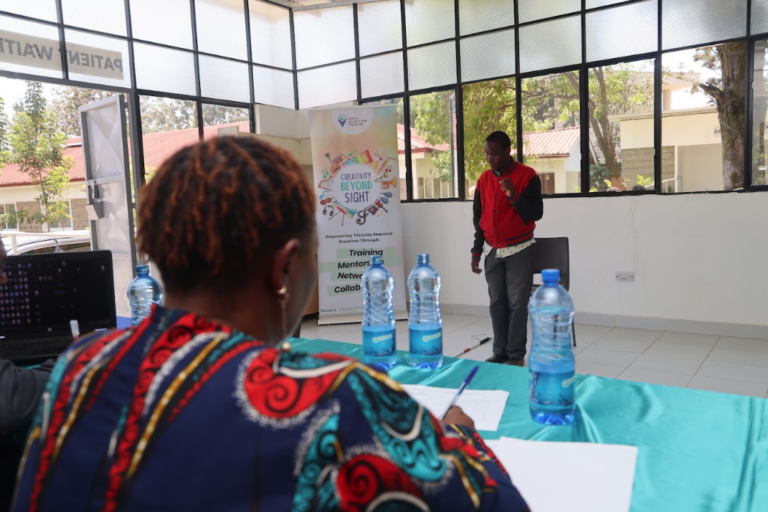
• Nairobi Talent Auditions (18th June 2025 | KSB Grounds): Attracted 66 visually impaired contenders (39 female, 27 male) performing across 18 distinct disciplines, spanning music, performance arts, and digital media production. Evaluations were spearheaded by a peer-led panel comprising blind creative professionals and one sighted judge.
• Strategic Stakeholder Convening (19th June 2025 | KNLS Nairobi): Opened by Ivan Omondi (KSB) and Sarah Ogembo (KNLS), this forum unified diverse multi-sector actors—including the Kenya Film Commission, African Women’s Orchestra, Dreamland Music, and Creative Discipleship Program of Kenya (CDPoK)—to engineer pathways into Kenya’s broader creative economy.
Quantifiable Scale, Inclusion, and Impact Dynamics
1. Demographic Demanded Outreach & Sectoral Disaggregation
The initiative successfully engaged and upskilled 159 direct project beneficiaries through intensive talent screening and specialized laboratory training cycles:
2. Mainstream Media Outreach and Stream Analytics
To completely dismantle systemic social stigma, Sanara projected its flagship ensemble, the Gusa Nafsi Band, directly into national broadcasting platforms, capturing significant public attention:
KU TV Live Broadcast (28th June 2025): Captured an active digital streaming audience of 71,000 live viewers via YouTube, initiating structural discussions for academic creative exchanges with Kenyatta University.
Citizen TV “Roga Roga” Feature (12th July 2025): Achieved a major milestone in primetime media inclusion, drawing over 100,000 active YouTube Live viewers alongside a massive national television broadcast audience.
Kenya Film Commission (KFC): Extended institutional entry for KSB professionals into dedicated three-day Data Protection and Privacy Training to champion responsible data practices in creative production.
Canon Photography: Confirmed a specialized technical partnership for September 2025, deploying adaptive techniques and inclusive instruction to equip visually impaired trainees with functional photography skills.
African Women Orchestra: Facilitated direct gender equity placement, allowing trained visually impaired women musicians from Sanara to join and perform within their professional orchestral network.
Cross-Cultural Integration (“Nothing Knew”): Conducted in August 2025 at KNLS in partnership with Noemi Ferrari, Alan Alpenfelt, and Mbutch, bringing 50 blind and sighted dancers and storytellers together to challenge deep-rooted societal perceptions.
Resource Mobilization (“Beyond Sight” Concert): Executed on 19th July 2025 at Eugenia Park alongside Executive Director Samson Waweru, Treasurer Martin Kieti, and advocate Reuben Kigame. The benefit concert mobilized funding and pledges for essential Braille machines dedicated to the Salvation Army Thika High School for the Blind. Critically, Eugenia Park committed to a permanent venue partnership to host ongoing Sanara training clinics across Kiambu County.
THE OUTCOME
Sustainability Mechanisms & Future Rollout
Through consistent follow-up mentorship sessions extending through November, the Sanara Project successfully moved from talent discovery to sustainable monetization:
- Commercial Monetization: Independent bands and choirs comprised of visually impaired artists have been formally organized and are actively generating revenue by commercializing their skills through live public performances.
- Asset Capitalization: The project centrally equipped its recording studio with modern musical instruments, securing an infrastructure foundation for continuous practice, independent music production, and ongoing commercial income-generating activities.
- Regional Structures: Led to the creation of decentralized grassroots units, including the newly formed Gusa Nafsi Band – Kisumu chapter (4 males, 2 females), supported directly by the National Council for Persons with Disabilities (NCPWD).